Medical Management System
Smart Medical Image Recognition
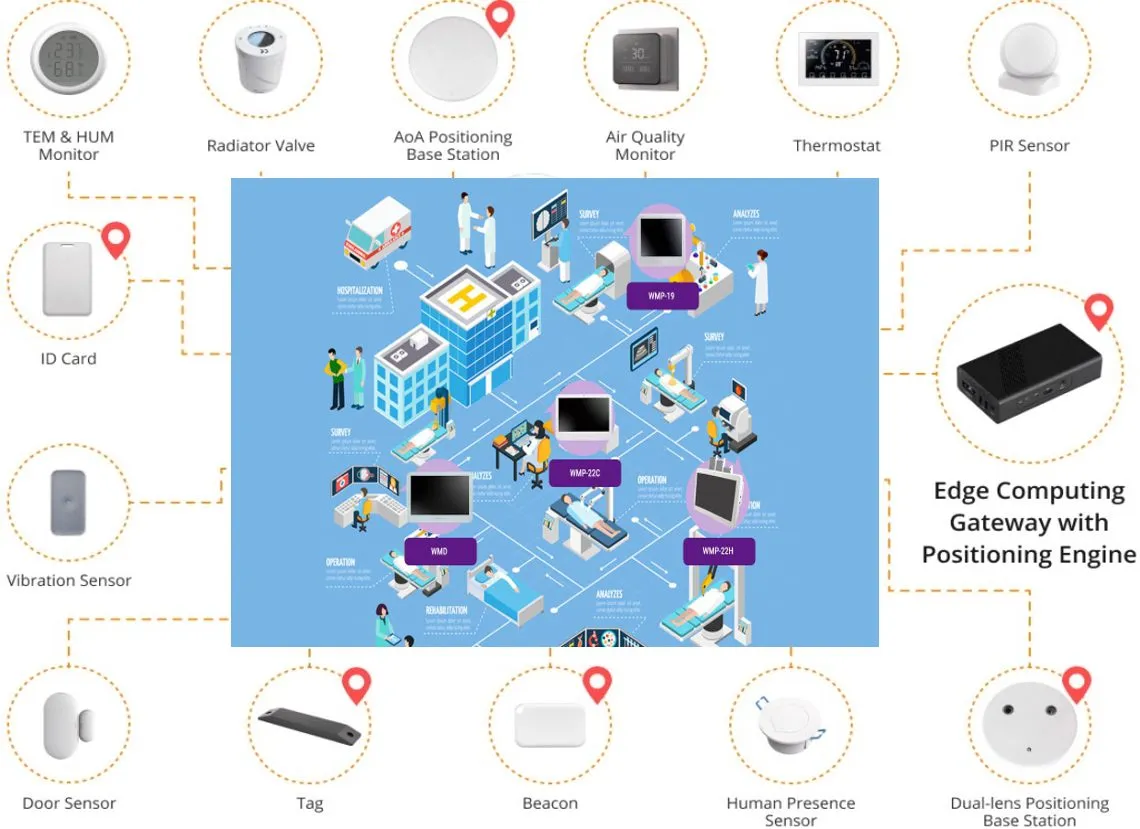
The Aiii Medicare Management System develops a new generation of intelligent monitoring products, delivering efficient and reliable smart solutions for healthcare, transportation, education, and industrial sectors.
Smart Hospital Planning and Design
The Aiii MMS system can be introduced at the hospital construction planning stage, creating 3D digital twin models of building structures, traffic flow design, and MEP (mechanical, electrical, and plumbing) systems to achieve:
- Smart Drawing and Clash DetectionPrevent design flaws in critical spaces such as operating rooms and intensive care units, reducing construction errors and future renovation costs.
- Full Lifecycle ModelEstablish a comprehensive hospital lifecycle model that can be continuously updated and optimized from planning and construction to operation and maintenance.
- Intelligent Construction ManagementLeverage digital twin technology to monitor construction progress, quality, and safety in real time, ensuring hospital projects meet design standards.
Integration of Hospital Information Systems (HIS) with AI Image Recognition
The Aiii MMS platform seamlessly integrates various hospital information systems and enhances medical process efficiency through AI image recognition technology:
- Information System IntegrationOutpatient, inpatient, laboratory, imaging (HIS/LIS/RIS/HRP), and other systems are perfectly integrated with the V-BIM platform, achieving data interoperability and centralized management.
- AI Image Recognition ApplicationsSmart management of medical staff and patient movement routes; real-time monitoring of patient identity verification and behavior; medical record and BI (Behavioral Intelligence) data analysis
- Enhanced Risk ManagementEffectively reduces the risk of medical disputes, improves healthcare efficiency, and comprehensively protects the rights of doctors, patients, and their families.
Medical AIoT and Intelligent Equipment Management
With smart IoT technology, hospitals can establish a complete equipment lifecycle management system to ensure medical devices remain in optimal operating condition.
- Medical Equipment AIoT IntegrationMedical instruments, monitoring devices, microscope imaging, and cell analysis equipment can all be connected via AIoT technology, enabling real-time data monitoring and integrated management.
- AI-Assisted DiagnosisAI models can automatically analyze diagnostic images and data, providing decision support for physicians, effectively reducing the burden of manual interpretation and improving diagnostic accuracy.
- Preventive MaintenanceEquipment operation data (current, voltage, temperature) is fed back to the war room in real time, supporting preventive maintenance plans and reducing equipment failure rates and maintenance costs.
AI Vital Sign Monitoring and Hospital Safety
Reduce medical dispute risks, achieve labor reduction, and enhance management efficiency.
- AI Vital Sign MonitoringBy combining CCTV with AI technology, patient vital signs such as heartbeat, respiration, and body temperature can be recognized and monitored in real time without contact. If abnormalities are detected, alerts are immediately sent to medical staff.
- Patient Safety ProtectionThe smart system can detect emergencies such as patient falls, fainting, or wandering. Through real-time notifications, it ensures medical staff can provide assistance immediately.
- Hospital Campus Safety MaintenanceTheft and abnormal behavior in hospitals are proactively detected and flagged by AI image recognition systems, significantly enhancing campus safety management and protecting patients, visitors, and healthcare staff.
7×24 Monitoring, Incident Reporting, and Event Management
- Artificial Intelligence (AI) and Deep LearningEnables efficient image processing applications such as facial recognition, license plate recognition, and behavior analysis, providing customers with accurate and real-time data support.
- IoT Ecosystem DevelopmentBuilds a smart platform for device interconnectivity, offers open APIs, simplifies system integration, and accelerates the deployment of diverse IoT devices.
- Edge ComputingEnables real-time data processing and decision-making at the endpoints, reducing latency and improving responsiveness.
- Smart Energy Saving and Environmental ControlMonitors lighting, temperature, humidity, and HVAC systems to automatically adjust energy usage, achieving energy savings and environmental optimization.
Smart Healthcare Aiii Medical Management System
The Aiii Medical Management System performs status detection for various environments, with applications in home care, nursing services, and public security. The system uses millimeter-wave radar for environmental detection without employing cameras or recording devices. It can be installed in private spaces such as restrooms and nursing rooms, ensuring safety while safeguarding customer privacy.
Smart Hospital War Room Management Concept
The Aiii MMS Smart Hospital War Room provides hospital administrators with a comprehensive real-time monitoring and management platform:
- Decision Support SystemThrough remote monitoring, data visualization, and AI early-warning functions, it significantly enhances hospital decision-making speed and emergency response capabilities.
- Patient Flow Hotspot Distribution and Congestion Alerts
- Environmental Parameters by Floor (temperature, humidity, air quality)
- Medical Equipment Operation Status and Anomaly Alerts
- Emergency Alerts and Real-Time Reporting Mechanism
Future Outlook and Application Expansion
This system is expected to set a new benchmark for smart medical clinic operations and drive digital transformation across the entire industry. In the future, integration with blockchain technology will be explored to enable secure tracking of patient data, further enhancing the system’s security and reliability.
- Blockchain Technology Integration
- Expansion to Other Medical Departments
- Industry Digital Transformation
On-Chain Data for Trusted Healthcare
All medical data, images, and documents are automatically uploaded to the blockchain, generating immutable timestamps to ensure transparency and traceability of medical records, effectively reducing disputes and conflicts.
- Electronic Medical Record ManagementOnce uploaded to the blockchain, patients’ medical records can be securely shared across different healthcare institutions, avoiding duplicate tests and misdiagnoses. Patients retain ownership of their data and can decide who has access to their medical records.
- Wearable Devices and Health DataHealth data collected by wearable devices (such as heart rate and blood pressure) is uploaded to the blockchain in real time, ensuring authenticity and timeliness. Doctors can use this data to provide remote diagnoses and recommendations.
- Medical Imaging and Genetic DataOnce stored on the blockchain, medical imaging and genetic data can be securely shared with research institutions or pharmaceutical companies, promoting medical research and drug development. Patients can receive benefits from the use of their data through smart contracts.
- Pharmaceutical Supply Chain TrackingRecords of drug production, transportation, and sales are uploaded to the blockchain, ensuring authenticity and safety, and preventing counterfeit drugs from entering the market. Patients can scan the blockchain QR code on medications to verify their origin and authenticity.
- Medical Insurance and ClaimsSmart contracts can automatically enforce insurance claim conditions, such as verifying eligibility based on wearable device data. This improves claim efficiency while reducing human intervention and fraudulent claims.
- Medical records and whitelist patient management
- Preventing data falsification and internal/external fraud
- Cross-platform data sharing (supply chains, brand alliances)
6th-Generation Intelligent Aiii MMS
- Symptom AnalysisLeverage AI and big data technologies to improve diagnostic accuracy, optimize medical resource allocation, and build a comprehensive image analysis database through case data collection.
- Blood TestingUse AI and big data to enhance diagnostic precision, optimize resource allocation, enable remote multi-testing, and reduce the risk of misdiagnosis.
Smart Medical Image Recognition
Book a Demo →